It was photos of climbing on the steep orange walls of the Todra Gorge that initially peaked my interest in Morocco. While Tafraout in the Anti-Atlas Mountains was more of a granite trad area, Todra is a grippy limestone sport multi-pitch area. I spent four non-travel days just outside the canyon with the hopes of doing some harder sport and some of the many multi-pitches. The rock was good and the climbing fun, but the guide book situation a bit lacking. Unfortunately a guide-issue kept me from getting in a lot of climbing, but I created an awesome side as a result from that!
TJ finishing the 5c crack section of Techno Trousers
While it was sport climbing on the steep canyon walls of the Todra Gorge that caught my eye to put Morocco on my map, it was the area of Tafraout that solidified my trip. The Anti-Atlas Mountains are closer to the desert, warmer, lower elevation than the Atlas Mountains so perfect for a winter trip. There is endless rock to be explored around this small town with an adventurous, trad-feel. You can find some continuous cracks here, but much of the climbing felt like trad protected face climbing on juggy, broken (but almost always very solid (quartize). I was hoping for more of a sure deal for climbing and didn’t want to bring gear so I partnered up with TJ, a US ex-pat guide from Jebel Adventures who is probably the only multi-pitch or trad guide in the area.
From the Frey Refugio, it’s hard to count all the climbable towers circling the Laguna Tonchek, but it’s easy to imagine their shapes as cannons, faces, animals, chopsticks and hand gestures. The uniqueness of climbing in this area made the trip to Bariloche in the Lakes District of Central Patagonia an easy “yes”. I speak about logistics in this blog post, but this is my climbing primer from getting on top of some amazing spires!
When my friends showed me the spires ringing the cirque outside the Frey Refugio, I was an immediate yes to join them on their trip down to Argentina, centering on Bariloche. This isn’t the High Andes, but it’s definitely the Andes, Patagonia and alpine. The prominence here makes 7,500-8,500 ft summits provide a great view from a valley floor around 2,500 ft. It was a great zone to climb interesting spires, get on top of the highest thing around and stumble our way through a mix of information for a memorable keystone to the Central Patagonia trip. You can read my climbing trip here, but this post is about the logistics part which I found difficult to get a full picture abroad before the trip and only slightly better locally.
Bariloche is the ski-epicenter of Argentina, a major summer trekking destination, the main airport for the Lakes District in Central Patagonia and is incredibly beautiful in all seasons. This is a small city of 140,000 people sitting on the shore of Nahuel Huapi Lake. Nahuel Huapi Lake has the equivalent surface area to Lake Tahoe but 3x more shoreline as it is drawn into fjord-like inlets and permeated by an archipelago of islands and peninsulas both big and small. Over the ’25-’26 new year I spent three weeks in the Lakes District and two in the Bariloche area climbing, hiking, running, eating and visiting its lakes and beaches.
In mid-September I had the honor of being invited on a friend’s climbing trip out to The Red River Gorge, KY. It was an easy yes just for the huge joy I get from spending many days laughing and building friendships with the people I love in my life. I was also really excited to check out this iconic climbing area known as a world-class destination for steep, overhung routes where you can climb in the rain and pro climbers attempt 5.14. It absolutely delivered on what I expected with very featured sandstone with rails, pockets, large hueco holes and deep features.
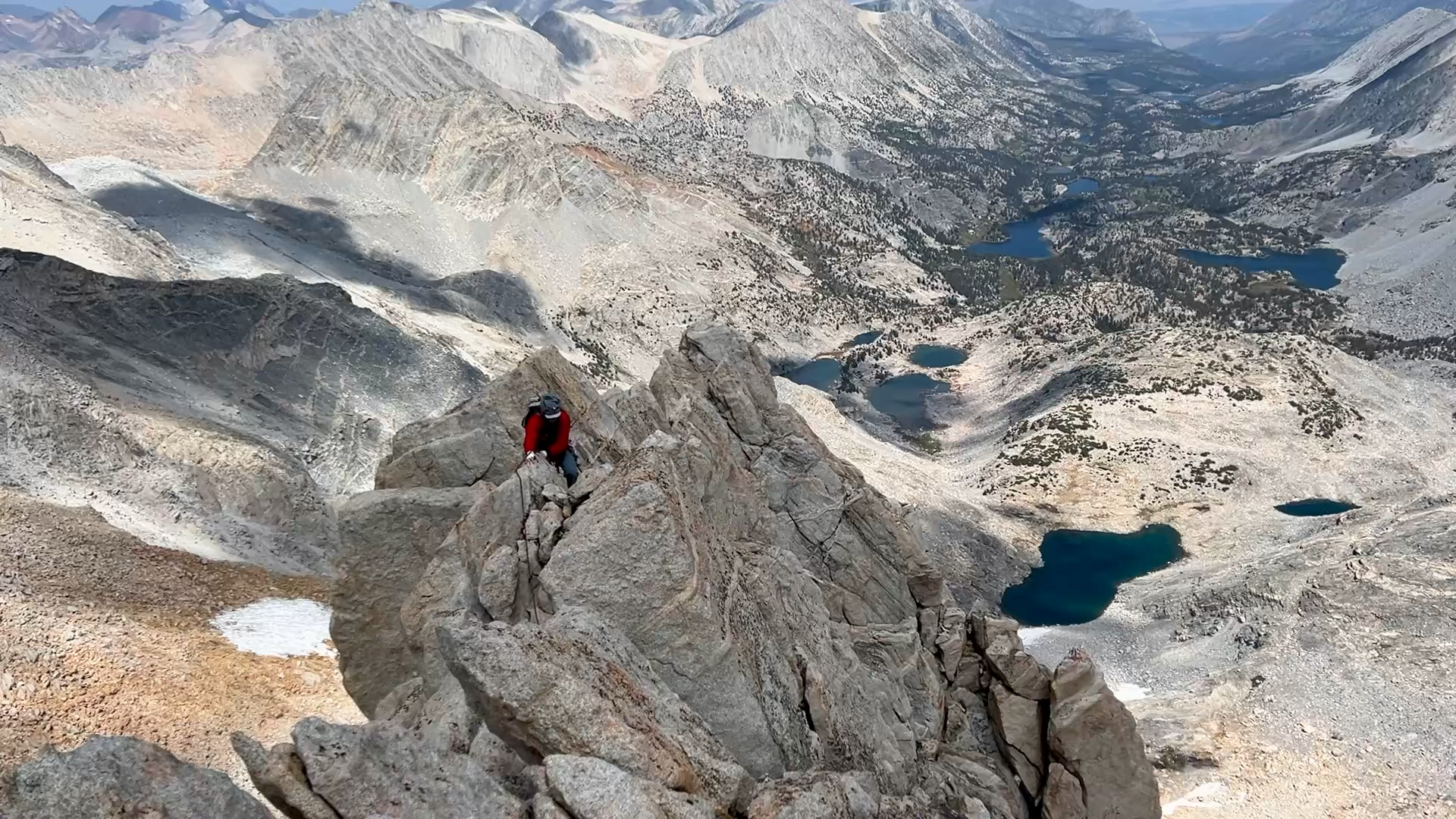
Bear Creek Spire’s North Arete (5.8, 1,000 ft, 10p) is a classic Eastern Sierra alpine route to a 13,700 ft summit. I first attempted it as a newer climber in October and high wind conditions, luckily I was convinced to bail at the base. Later I sent it proper from a high camp in August 2019. This time around, I felt it was the perfect objective to get into the alpine with a newer trad partner. Especially because the approach was short enough to attempt in a day, avoiding the permitting game (which I was pretty unsuccessful with this year). It may also be the last alpine climb I get for the year, so worth the push.
Charlotte Dome, South Face (5.8, 12p, 1,500ft) is a 100 Classic Climb of North America. It is a bit too long to car-car (12mi, 3,000 ft from Eastside), so my friend Kevin and I decided to do it in two days. I was super excited to experience this large, long, wilderness epic climb in my year back to climbing and it fully delivered an adventure.
Two days before my flight a forest fire had started just outside our booked campsite and reservations were canceled, the forecast had rain every day starting halfway through the ten day trip, but I just packed more non-climbing stuff because British Columbia in the summer is AMAZING. The fire would die quickly and the rain would mostly stay away. Last time I rolled through here on my way to Alaska my partner had a broken thumb so I wasn’t able to get much climbing in so I was excited to get a real taste of Squamish climbing this time and got on everything from leading 10d Sport, 5.9 Trad Multipitch and following 11d Sport across Murrin Park, The Chief, Chek and Shannon Falls areas.
I’m not sure how I heard about the desert wilderness granite climbing area called Cochise Stronghold in SE Arizona 40 miles from the Mexican border, but I think I first peeked a look at these domes from Fred Beckey’s 100 Classic Climbs of North America. So when work brought me to Phoenix in the winter, I thought there was little excuse not to check out its desert domes with their abundant featured granite, chicken heads and alligator plates uncommonly found in this rock type.